Travel notebook
How to order seafood in Ha Long
A good seafood meal starts before the pan: identify the item, see its weight, confirm the pricing unit and preparation charge, then agree the estimated total.
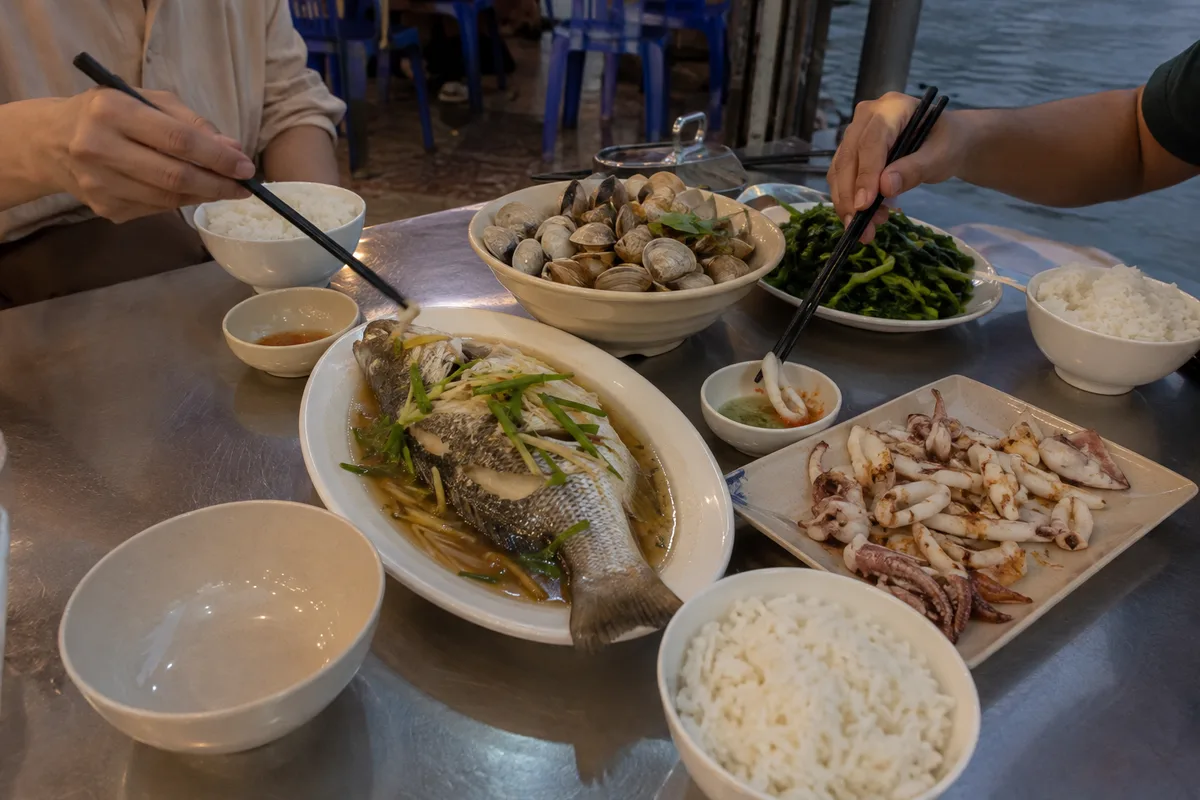
Ha Long seafood restaurants range from fixed-price kitchens to displays where diners select a live or chilled item and pay by weight. The second format is not difficult once the order is made explicit. Identify the animal, watch the weighing, confirm the price unit, choose the preparation and ask for the estimated total before cooking begins.
Quang Ninh’s tourism authority reports that local market inspectors check whether businesses display prices and sell at those displayed prices. Its account shows live-seafood boards updated by the day. That is a useful local expectation, but the diner still needs to match the board to the exact item and unit being ordered.
The 60-second ordering sequence
Do these steps while the seafood is still at the display:
- Point to the exact item. Similar-looking tanks can hold different species, sizes and grades.
- Confirm the price unit. Is the figure per kilogram, per 100 grams, per plate or for the whole animal?
- See the weight. Keep the scale display and the item in view, then repeat or write down the weight.
- Choose the cooking method. Steamed, grilled, fried, hotpot and sauce preparations may be charged differently.
- Ask about additions. Confirm preparation fees, sauce, side dishes, tax and service.
- Agree an estimated total. The useful calculation is displayed unit price multiplied by recorded weight, plus every agreed extra.
If any part remains unclear, pause. A fixed-price menu portion is a perfectly sensible alternative to buying an entire animal by weight.
Five Vietnamese questions to show, not shout
These short lines are useful on a phone screen or written note:
| Vietnamese | Meaning |
|---|---|
| Giá này tính theo ký hay theo đĩa? | Is this price per kilogram or per plate? |
| Con này nặng bao nhiêu? | How much does this one weigh? |
| Phí chế biến bao nhiêu? | How much is the cooking charge? |
| Tổng cộng khoảng bao nhiêu? | Approximately how much in total? |
| Xin ghi giá ra giúp tôi. | Please write the price down for me. |
A calculator screen is often clearer than improvised pronunciation. Check that both sides are discussing the same currency and number of zeros.
Decode the menu before choosing a tank
| Menu term | What it usually identifies | Question still to ask |
|---|---|---|
| Tom | Shrimp or prawn | Which type and size, and is the price by weight? |
| Cua / ghe | Crab / swimming crab | Whole-animal weight or prepared portion? |
| Be be | Mantis shrimp | Shell-on weight, size and preparation? |
| Ngao | Clam | Which clam, and is the dish thoroughly cooked? |
| Hau | Oyster | Raw, grilled or steamed, and sold by piece or plate? |
| Muc | Squid or cuttlefish | Whole item, rings or prepared cake? |
| Ca | Fish | Which species, whole weight or fillet portion? |
| Lau hai san | Seafood hotpot | Which seafood and what is included in the set? |
English common names are not always used consistently. When the species matters for an allergy, dietary reason or price, a menu translation or photograph is not enough: ask the kitchen to identify the ingredient directly.
Whole-item weight versus edible portion
Crabs, shellfish and whole fish include shell, bone or other parts that will not all appear as edible meat. That does not automatically mean a weighing is dishonest; it means the price model needs to be understood before ordering.
Ask whether the animal is weighed before cleaning, whether a minimum weight applies, and whether all prepared portions will return to the table. If choosing a large fish or crab for two people, ask the staff to suggest a realistic size and confirm it against the scale yourself.
Do not build an order by accepting several verbal suggestions in quick succession. Finish the details for one dish before selecting the next.
Choose the right side of the city
Ha Long’s main visitor areas sit on different sides of the Cua Luc waterway. A restaurant described only as “Ha Long” may be a bridge crossing and a traffic delay away.
Hon Gai
The eastern city side suits travellers combining a meal with the museum, waterfront or Ha Long Market 1. The market is a real trading place with fresh seafood and general goods. It is useful for seeing ingredients and everyday commerce, but a raw-food stall is not automatically equipped to cook a tourist’s purchase.
Bai Chay
The western visitor district is practical for beach, amusement-park and many hotel stays. Cai Dam Market is a more logical market stop when the rest of the day is already on this side. Do not cross Bai Chay Bridge solely because an old list calls one market “best”.
Use the map on the day. Market entrances, road access and individual stall times are more changeable than the neighbourhood geography.
A market walk and a restaurant meal are different activities
A working market is best approached as a place of trade. Expect water underfoot, deliveries, scales, knives, narrow passages and shoppers doing routine business. Wear shoes with grip, keep children beside you and stand clear of cutting and loading areas. Ask before photographing a person or their stall.
Buying raw seafood creates a second problem: safe transport and cooking. Unless your accommodation has agreed facilities and you understand storage, it is usually more practical to observe the market and eat at a kitchen that takes responsibility for preparation.
Food safety: favour thoroughly cooked and hot
The World Health Organization’s traveller guidance recommends food that is thoroughly cooked and remains steaming hot, and advises avoiding raw seafood. That principle is especially useful when a short holiday does not leave room to recover from foodborne illness.
- Choose a busy, orderly kitchen where cooked food is handled separately from raw stock.
- Have shellfish, fish and minced seafood cooked through rather than merely warmed.
- Eat cooked seafood promptly instead of carrying it unrefrigerated through a day of sightseeing.
- Wash or sanitise hands after touching market surfaces, cash or raw-food displays.
- Do not interpret a live tank as proof that handling, water quality and subsequent cooking are safe.
Anyone who is pregnant, older, very young or immunocompromised should seek appropriate medical advice rather than treating a destination guide as personalised food-safety clearance.
Serious seafood allergies need a written plan
“Seafood” is not one allergen. Fish, crustaceans such as shrimp and crab, and molluscs such as squid, oyster and clam are different groups. A person may react to one or several, and restaurant kitchens may share steamers, grills, fryers, knives, boards, broths and sauces.
Before travelling, prepare a professionally translated Vietnamese allergy card that names the exact trigger and states that cross-contact is dangerous. Show it before choosing a dish. Ask whether separate equipment is realistically available; do not interpret friendliness or a general “yes” as a technical answer.
Fish sauce, shrimp paste and seafood stock can appear in food with no visible seafood pieces. If staff cannot confidently identify the broth, sauce and shared equipment, choose sealed food with a readable label or another kitchen.
Seafood on a Ha Long cruise
An “included lunch” does not describe the menu, drink charges or ability to handle an allergy. Before paying for a Ha Long cruise, ask the operator for:
- a sample menu for the exact day or overnight product;
- which meals are included and whether drinks cost extra;
- whether service is shared dishes, buffet or individual plates;
- how vegetarian, vegan, religious and allergy requirements are handled;
- whether the galley can prevent cross-contact;
- what alternative exists if the requested meal cannot be supplied.
Send important dietary information in writing and retain the reply. Repeat it at check-in. A boat galley has fewer substitutes than a city neighbourhood, so unresolved questions are a reason to choose another sailing rather than hope the crew improvises.
A clean way to resolve a disagreement
If the bill differs from the order, compare it calmly with the displayed unit, recorded weight and agreed preparation charges. Ask for an itemised calculation. A photograph of the menu or written price can help, but ask permission before photographing staff.
If an issue cannot be resolved, use a current official tourism or market-management contact displayed at the venue. Do not rely on a phone number copied from an old blog; agency responsibilities and hotlines can change.
Sources and live checks
- Quang Ninh Tourism Department: transparent pricing and visitor-market inspections for the local practice of displaying and checking prices.
- Quang Ninh Tourism Department: Ha Long Market 1 for its role as a central working market. Do not reuse the old prices or hours on that page.
- WHO: a guide on safe food for travellers for thoroughly cooked, hot food and raw-seafood precautions.
Verify before ordering: current item, pricing unit, weight, preparation fee, estimated total, ingredients and allergy arrangements.
Put it on the map
Addresses and map points
Use these points for orientation, then match the exact terminal, entrance or meeting place to your current confirmation.
Ha Long Market 1
Bach Dang Street, Bach Dang WardHa Long CityVietnamA working market on the Hon Gai side; raw-seafood stalls are not automatically restaurants.
Cai Dam Market
Hoang Quoc Viet Street, Bai Chay WardHa Long CityVietnamA Bai Chay-side market option for travellers whose hotel and evening plans are west of the bridge.
Keep exploring