Food and markets
Eating in Ha Long City: food and markets
Seafood is central to local menus, but a good meal depends on clear pricing, safe allergy communication and choosing the right market or restaurant for your plans.
Eat with context
Breakfast, seafood and an evening market
Ha Long food makes more sense when you choose the format first: a simple local breakfast, a clearly priced shared seafood meal or an evening market visit.
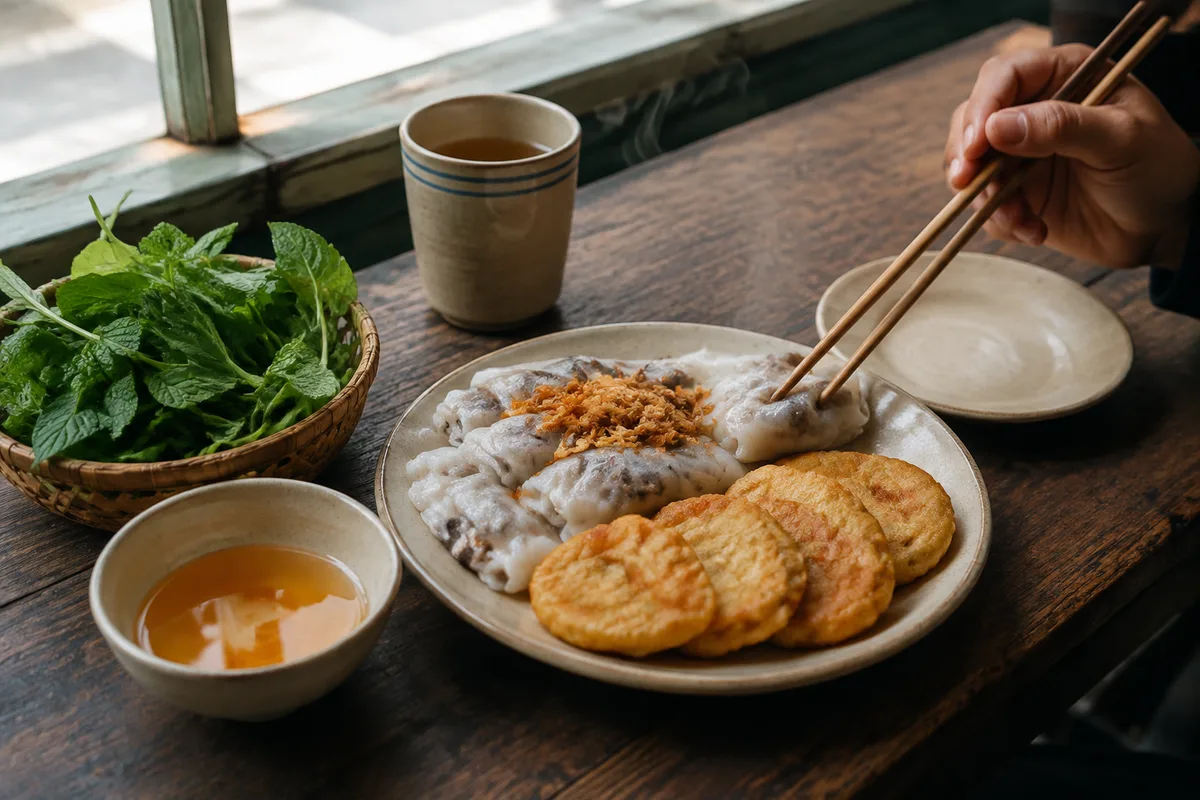
Ha Long’s food identity comes from the coast and from Quang Ninh’s wider border-and-island geography. Fresh seafood gets the attention, but one of the easiest local specialities to try is cha muc Ha Long: seasoned squid formed into cakes and fried, often served with sticky rice or banh cuon rice rolls.
You do not need an expensive live-seafood dinner to eat well. A useful plan can be as simple as banh cuon with cha muc for breakfast, a market walk without buying raw seafood, and one restaurant meal where the full price is agreed before cooking.
Explore the Ha Long food guides
Use this page to choose the right neighbourhood and type of meal, then open the guide that answers the next practical question.
| Guide | Best for | What it helps you decide |
|---|---|---|
| Cha muc Ha Long | Trying the city’s protected squid-cake speciality | What it is, how it is commonly served and whether a labelled pack can travel safely |
| How to order seafood | A restaurant meal priced by weight | Species, unit price, scale weight, cooking charge, estimated total and allergy questions |
| Quang Ninh seafood specialities | Understanding an unfamiliar menu | The difference between ngan, sa sung, be be, tu hai and broader regional origin claims |
These pages do not rank restaurants. Kitchens, prices and opening hours change; the guides concentrate on decisions a traveller can verify at the counter.
Choose the right food experience
| What you want | Best format | Watch for |
|---|---|---|
| A straightforward local breakfast | Banh cuon with cha muc, sticky rice with cha muc, or a noodle shop | Limited English, early sell-outs and shared condiments |
| To see everyday trade | A working morning market | Wet floors, active deliveries and stalls that are not serving cooked food |
| A seafood dinner | A restaurant with an itemised menu | Per-kilogram pricing, preparation charges and minimum weights |
| Food before a cruise | A simple cooked meal near your actual pickup side | Traffic across Bai Chay Bridge and uncertain cruise check-in time |
| Food to take onward | Labelled, sealed dry or chilled products from a suitable retailer | Cold-chain needs and destination-country customs rules |
What to try without chasing a viral list
Cha muc Ha Long
Cha muc is squid cake, commonly hand-pounded for a springy texture and fried until golden. Try it as part of a meal rather than buying a large gift pack before you know whether you like the texture and seasoning. Ask when it was cooked and whether it contains flour, egg, fish sauce or other additions relevant to your diet.
The protected Ha Long product has a defined geographical indication and traditional production characteristics. The dedicated cha muc guide explains what that does—and does not—tell a buyer.
Banh cuon cha muc
Soft steamed rice rolls and hot squid cake make a practical breakfast. The plate may include fish sauce, fried shallot, herbs or pork-based fillings depending on the shop. Vegetarian-looking rice rolls are therefore not automatically vegetarian.
Bun be be and seafood noodles
Mantis-shrimp noodle soup is widely associated with the Quang Ninh coast. Broths and garnishes vary by kitchen and may contain several seafood species. Anyone with shellfish allergy should avoid relying on appearance alone.
Banh gat gu from Tien Yen
Banh gat gu is a Tiên Yên speciality rather than a dish that originated in Ha Long. It is made as a soft, flexible sheet from rice batter, then rolled instead of being cut into flat noodles. Quang Ninh’s tourism portal describes the finished rolls being eaten with a savoury dipping sauce; recipes can include fish sauce, fried shallot, animal fat or minced meat.
That last detail matters for travellers: a white rice roll is not automatically vegetarian, halal or suitable for an allergy. Ask about the batter and the dipping sauce separately. Availability in Ha Long changes, so do not cross the city for a listing that has not confirmed it that day. For regional background, see the province’s Tiên Yên food account and current overview of local food identities.
Simply cooked seasonal seafood
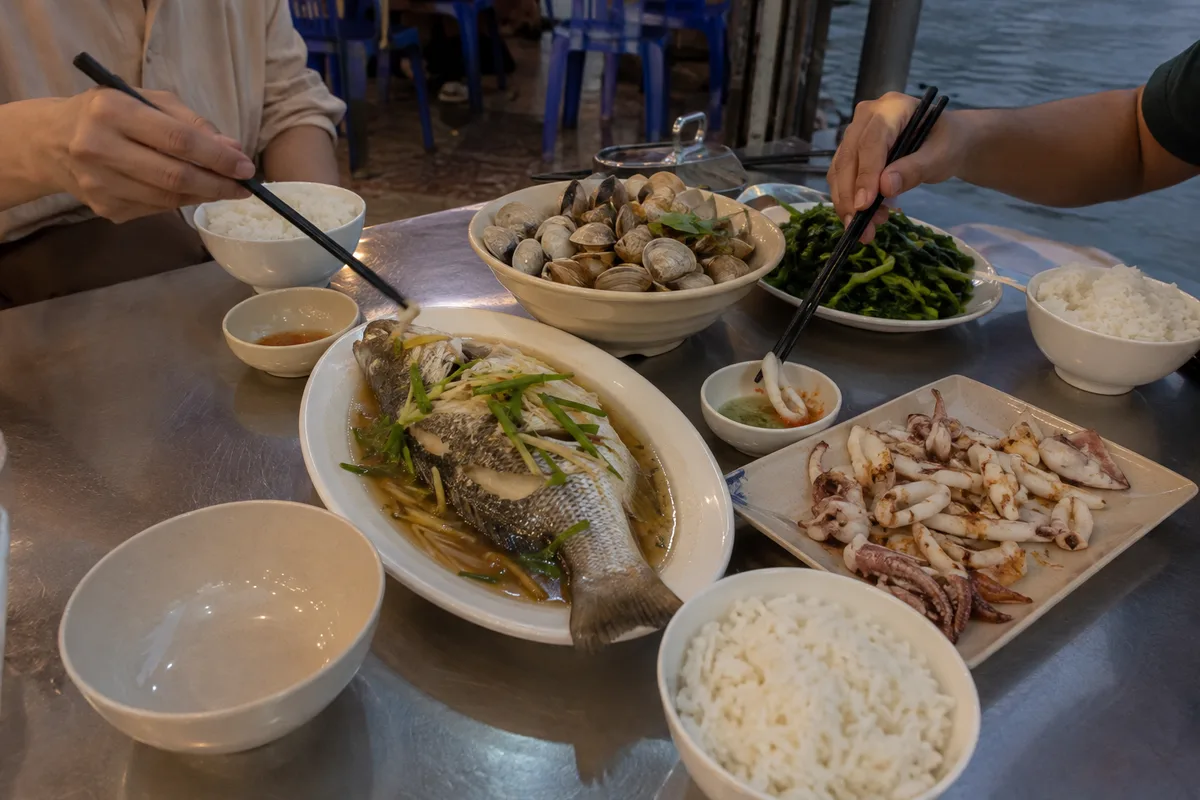
Steaming or grilling can make it easier to understand what you are ordering than a large mixed hotpot. Ask the species, weight, unit price and cooking method. Seasonal availability is more credible than a menu claiming every shellfish every day.
The regional tourism portal’s Ha Long food overview is a useful introduction to local dish names. Treat any quoted price as temporary and confirm it on the current menu.
Three markets, two sides of the city
Ha Long spans both sides of the Cua Luc waterway. Crossing between Hon Gai and Bai Chay adds road time, so choose a market near the rest of your day rather than chasing a supposed “best” one.
Ha Long Market 1: Hon Gai’s central working market
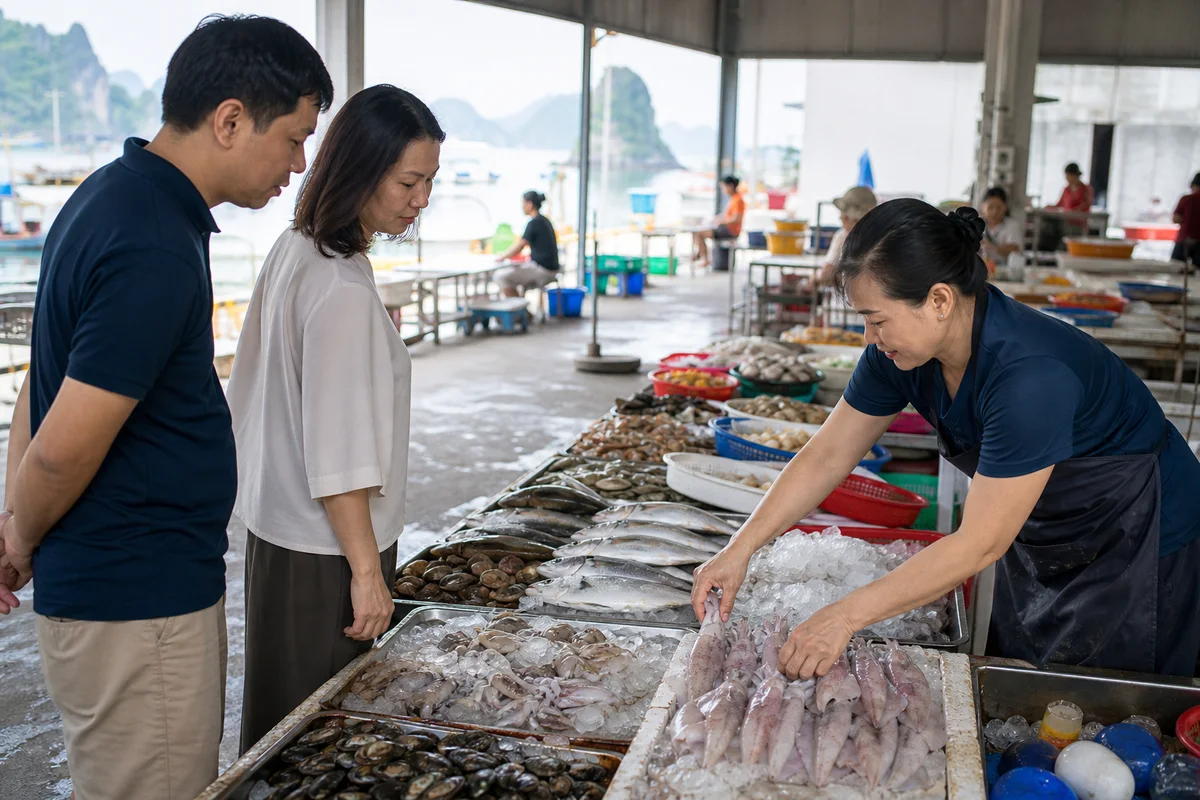
Ha Long Market 1 is on the Hon Gai side near the city centre and waterfront. It combines fresh food, seafood and other goods. Go to observe a working market, compare ingredients or buy a specific product; do not expect every raw-food vendor to cook purchases for tourists.
- Address: Bach Dang Street, Bach Dang Ward, Ha Long City
- Google Maps
- OpenStreetMap
Ha Long Market 2: food and dry goods
Market 2 is a separate market on Le Loi. It is often mentioned for dried seafood and packaged specialities as well as everyday goods. Check labels, production dates and storage rather than treating an unpackaged item as an easy flight souvenir.
- Address: 433 Le Loi, Tran Hung Dao Ward, Ha Long City
- Google Maps
- OpenStreetMap
Cai Dam Market: a Bai Chay-side option
Cai Dam is useful when your accommodation, cruise pickup or evening plans are in Bai Chay. It avoids crossing the bridge solely for a market visit and combines fresh-food trade with other retail.
- Address: Hoang Quoc Viet Street, Bai Chay Ward, Ha Long City
- Google Maps
- OpenStreetMap
A current Bai Chay night-market option
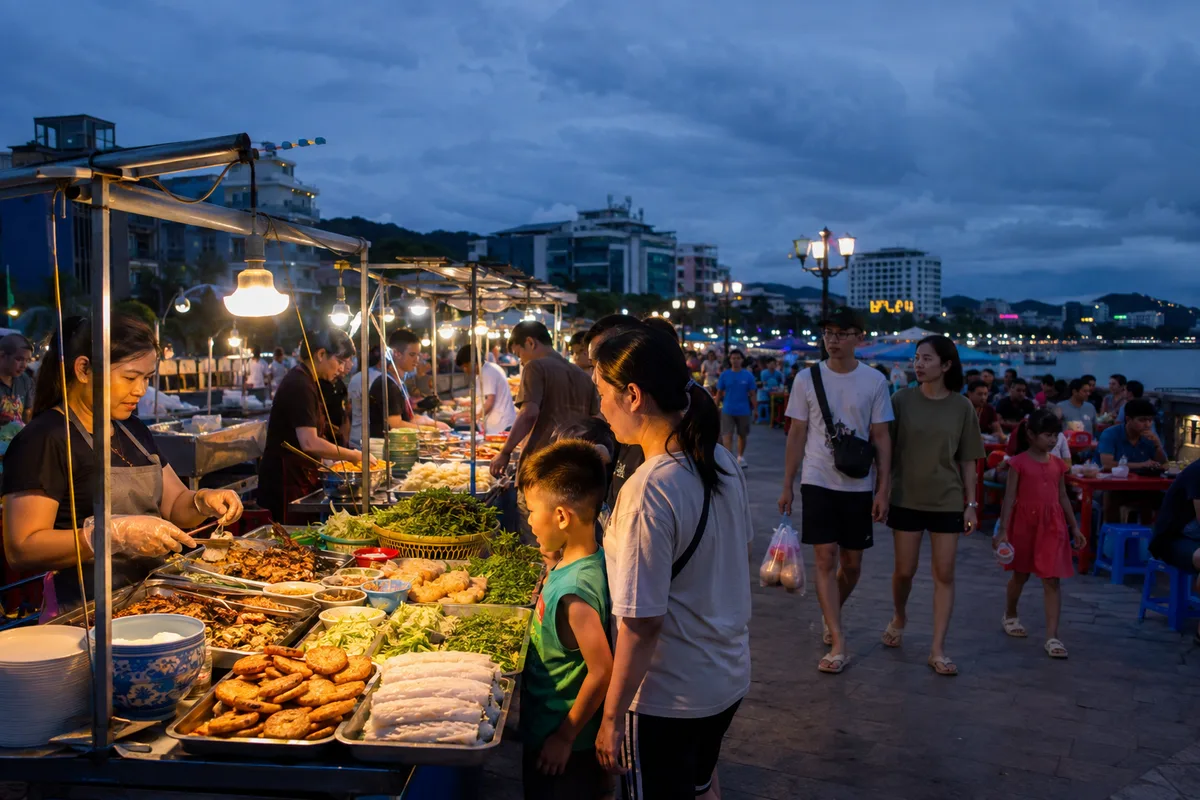
VUI-Fest Ha Long Night Market opened at the lighthouse area on Ky Quan Road in April 2026. The current provincial tourism report describes it as a combined food, entertainment and performance complex. That makes it an evening attraction, not a substitute for a morning working market where residents buy fresh produce.
Go for a walk, a prepared snack or a scheduled event. Check the current operating nights and programme before travelling: a launch announcement does not guarantee that every vendor, performance or light show runs daily.
- VUI-Fest Ha Long in Google Maps
- VUI-Fest Ha Long in OpenStreetMap
- Quang Ninh tourism update on the current night-time district
The official regional market guide confirms these broad locations. Market names, stall mix and opening patterns can change, so check the map listing and recent local notice on the day.
How to order live seafood without a bill surprise
For a fuller menu decoder, Vietnamese price questions and whole-item weighing advice, open the Ha Long seafood ordering guide.
Before the food leaves the display, establish all of the following:
- Which animal and how much? Watch it being weighed and ask to see the scale.
- What unit is quoted? Confirm whether the price is per kilogram, per 100 grams, per plate or for the whole item.
- What is the final weight? Repeat it back or photograph the written figure with permission.
- How will it be cooked? Steaming, grilling, hotpot and sauces may have different charges.
- Are there extra fees? Ask about preparation, condiments, seating, tax and service before agreeing.
- What is the estimated total? Request one complete figure or a written calculation.
If communication remains unclear, order a fixed-price menu item instead. Do not let a tank display or pressure from a group replace a price agreement.
Market etiquette and basic safety
Working markets have wet floors, sharp tools, deliveries and narrow aisles. Wear shoes with grip, keep children close and stand away from scales and cutting areas. Ask before photographing a vendor or their stock. A purchase does not automatically grant permission for a portrait.
Choose food that is cooked thoroughly and served hot. For raw or lightly cooked seafood, understand the increased food-safety risk and decide according to your health circumstances. Wash or sanitise hands before eating after handling cash or market surfaces.
Serious allergies need a written plan
Seafood kitchens commonly share grills, steamers, oil, knives, cutting boards, broths and sauces. A dish without visible shellfish may still have cross-contact or fish sauce.
- Prepare an allergy card in Vietnamese naming the exact ingredient and stating that cross-contact is dangerous.
- Show it before ordering, not when the dish arrives.
- Ask whether the kitchen can use separate equipment; do not interpret a polite nod as confirmation.
- Carry prescribed medication with you, not in luggage left at the hotel.
- On a cruise, disclose the allergy in writing before booking and again before boarding. A galley at sea has fewer alternatives than a city restaurant.
When staff cannot confidently answer, choose packaged food with a readable label or another kitchen. The safest meal is more important than completing a local-food checklist.
Cruise meals are a separate decision
A cruise package may include lunch or all meals, but that says nothing about portion style, drinks, dietary substitutions or shared cooking surfaces. Ask for a sample menu, what beverages cost extra, and whether outside food is allowed.
Notify the operator about vegetarian, vegan, halal, kosher, gluten-related or allergy requirements before payment. “Vegetarian” can still include fish sauce or seafood stock unless the kitchen understands the request precisely.
Responsible purchasing
Do not buy coral, shells from protected species, wildlife products or an animal whose legal origin cannot be explained. Avoid treating live-animal displays as entertainment. Order quantities the table can finish and ask for leftovers only when they can be stored safely.
For gifts, favour sealed products with ingredients, producer details, production date and storage instructions. Check the customs and biosecurity rules of the country you will enter; dried seafood that is legal to buy in Vietnam may still be prohibited at your destination.
Verify an individual restaurant before crossing the city
Use Quang Ninh’s regional cuisine guide to learn the local dish names, then verify any individual restaurant through its own current menu and contact channel. Match the address to the map, confirm that the kitchen is still operating and ask about unit pricing or dietary needs before travelling across the bridge.
This guide does not freeze a “best restaurants” list because ownership, chefs, standards and hours change faster than destination geography.
Sources and live verification
- Visit Quang Ninh’s market guide for current market names and broad locations.
- Visit Quang Ninh’s regional cuisine guide for local speciality context.
- Quang Ninh Tourism Department’s banh gat gu account for the Tiên Yên dish’s form and serving context.
- Quang Ninh Tourism Department’s current night-time district update for the VUI-Fest location and role.
- Wikipedia’s Ha Long overview for city geography only; use current venue sources for operations.
Verify again before going: market opening status, restaurant address, current menu, unit prices, dietary agreement and transport back to your accommodation.
Put it on the map
Addresses and map points
Use these points for orientation, then match the exact terminal, entrance or meeting place to your current confirmation.
Ha Long Market 1
Bach Dang Street, Bach Dang WardHa Long CityVietnamA large working market on the Hon Gai side; confirm current hours before making a special trip.
Ha Long Market 2
433 Le Loi, Tran Hung Dao WardHa Long CityVietnamKnown for both food and dry goods; the product mix and stall hours vary.
Cai Dam Market
Hoang Quoc Viet Street, Bai Chay WardHa Long CityVietnamA practical market option on the Bai Chay side for travellers staying west of the bridge.
VUI-Fest Ha Long Night Market
Lighthouse area, Ky Quan Road, Bai Chay WardHa Long CityVietnamA food-and-entertainment night market opened at the lighthouse area in April 2026; verify current operating nights.
Keep exploring